Satirical trend machine
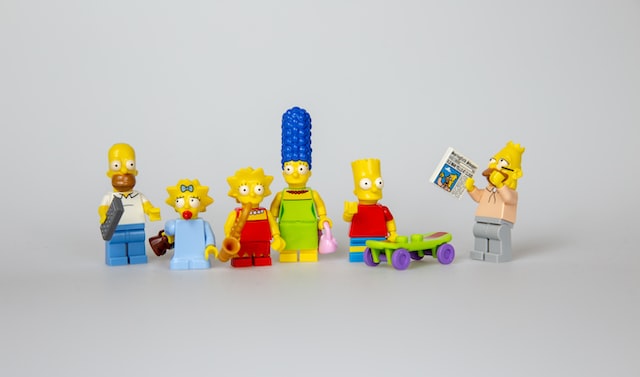
The writers of The Simpsons (not coincidentally there have always been many graduates of prestigious Ivy League universities among them) have long surpassed any fortune teller or stock trader in making accurate predictions. They identify key societal trends earlier and more accurately than others. Well, then according to logic: if you know the trend, you get a brand. In other words, you create such a significant and recognizable media content, which with high probability can get to the most interesting point of real developments.

Accurate prediction engine
Every Simpsons series, to simplify, is scripted on several levels: on the first level, Charlie Chaplin-style “gags” work (Homer regularly bangs his head against everything in sight), on a notional second level the plot of the series itself is played out, including characters from the Simpsons universe, but on the third level, the most interesting stuff happens. Traditionally, every (or almost every) episode of the series is constructed along the lines of a culturally relevant story. The basis can be anything from ancient Greek myths to Quentin Tarantino’s bloody cinematic tracts.
Writers sometimes disguise the so-called precedent text with outer layers of event pie (it must be interesting to chew on the info-food), but for a regular audience there are usually no mysteries. How do the creators manage to come up with new stories over 33 seasons and still accurately guess social trends and make predictions? The thing is, they don’t. Well, or almost not. They keep track of the numbers, make graphs… In short, they monitor everything that is troubling. And in the scenarios they offer variants of events.
Dotcoms, gentrification and making money in Dota
Over the last three decades, there hasn’t been a significant social trend that the Simpsons haven’t caught in their cartoon lens: economic ups and downs (Homer created the site in the wake of the dot-com boom and, of course, it ended badly), new trends in social life (the town of Springfield, America’s main dump, was suddenly becoming a hipster cultural centre – gentrification was taking place). Relatively recently, Homer would allow Bart to spend many hours playing a computer game suspiciously similar to Dota, because winning virtual tournaments brought money… Ring any bells?
Free media, paparazzi and corporations
A separate and obviously beloved theme of The Simpsons creators is freedom of speech (one of Homer’s catchphrases is “Take that, liberal media!”, which loosely translates as “Eat it, liberal media!”). Few episodes are without sarcastic jokes about television. To support them, there was even a parody character of “service journalist” Kent Brockman. The conditionality of all freedoms on the internet was also played up by the writers: Homer set up his own honest independent news website (Mister X) and even won a Pulitzer Prize, but quickly descended into fakery.
Among Homer’s many professions is a successful “career” as a paparazzi, which leads the hero to reflect on the meaning of privacy and journalists’ violation of the boundaries of “privacy”. Lisa Simpson is forced to publish her own wall newspaper’ because tycoon Monty Burns has bought up all the media in general. And in one of the episodes the same Lisa faces a greedy modern corporation called Mapple. The show has already featured top media personalities such as Mark Zuckerberg and Elon Musk. At the same time, jokes about Fox’s own channel appear quite often in the series.
The environmental agenda and the obesity epidemic
Many seasons of the series have focused on environmental and health issues (Lisa saved the forest; Springfield fought the nuclear plant and its owner Burns; the hero of the day was a three-eyed mutant fish; a feature-length film tried to isolate the entire town). In a recent season, snack and fast food lover Bart fell victim to obesity, with Homer suffering from the affliction from the first episode.
The Olympics, vegetarianism, bullying and fighting without rules
Actually, Homer Simpson doesn’t like the Olympics. The reason is that his favourite cable shows are cancelled because of the sports broadcasts. The creators of the animated series are well aware that modern sports are an expensive media show. Broadcasting ideas at odds with the mainstream irritates the mass consciousness, which suits the group of creators just fine.
The Simpson family doesn’t just watch TV and surf the Internet, but also faces other contemporary problems: Marge experiences emotional burnout from endless housework, Lisa endures deprivation because of her commitment to vegetarianism and Buddhism, and Bart is regularly beaten up by bullies at school. The latter situation allows series creator Matt Groening’s team to link school violence and on-screen violence directly: when Bart gets into UFC, Marge is forced to perform in the octagon herself to prove a complete no-brainer for the mass violence craze.
Groening’s team creates a cartoon chronicle of social life that transcends US borders and even the fringe of the present, often offering accurate observations and predictions. What other predictions have come true?
The Ebola epidemic and the coronavirus pandemic
In 1993, the Simpsons writing team predicted that a pandemic would engulf the world. And so it came to pass when humanity was confronted with a coronavirus in late 2019.
The 21st episode of season 4, titled Marge in Handcuffs, focused on Springfield residents’ struggle with an infectious disease, Osaka flu, which was accidentally brought to town from Japan.
And in 1997, episode 3 of the cartoon’s 9th season hit the screens. In the story, Marge suggests to her sick son Bart that he read a book with a monkey on the cover called Curious George and the Ebola Virus before going to bed. Seventeen years later an Ebola epidemic breaks out in the real world. It is difficult to call it a prophecy, though, as the virus was already known about from outbreaks in Sudan and Gabon in the 1990s.
Donald Trump
In episode 17 of season 11 (“Bart to the Future”), The Simpsons predicted the presidency of Donald Trump. “The prophecy has come true 15 years later. According to the writers, the premise of the episode was Trump’s first attempt to enter the presidential race in 2000. At that time, he managed to win the primary in two states, but did not make it any further. Subsequently, one of the writers of The Simpsons, Dan Greaney, said that the idea of a businessman presidency seemed impossible to implement to his colleagues. But according to screenwriters’ logic – taking an insignificant and unlikely event and pushing it to its absurd limits – is a great move, and so many plots have been developed.
Food printed on a 3D printer
Was introduced in episode 15 of season 16 (“Futu Drama”). Characters in the animated series demonstrated how a device could be used to make a three-dimensional real cake from a flat photo. In 2003 it really looked very futuristic, but in 2012 it became a reality. Now mankind can actually print food on 3D printers from specific ingredients. If STI experts are to be believed, this technology can become widespread in Russia in just four to six years.
Video calling, smartwatches and robot librarians
In 1995, in episode 19 of season 6 (“Lisa’s Wedding”), the Simpsons demonstrated technology very similar to modern video calling. Lisa communicates with Marge in exactly this way from her landline phone. The popularity of video calling technology on smartphones stems from the release of the FaceTime app in 2010. But in fact, the first “phonoscope” concepts were introduced by AT&T Bell Labs in 1960. The writers of The Simpsons have once again guessed the trend, and not just one! In the same series, viewers may spot a device that vaguely resembles a modern smartwatch. Almost 20 years later, Apple introduced a similar gadget. The same series featured robot librarians, whose real-world prototypes scientists began developing in early 2004.
The Higgs boson and the donut-shaped universe
Episode 2 of season 10 (“The Wizard of Evergreen Alley”) in 1998 shows Homer Simpson in an unusual role – he wants to become a great inventor. He writes various formulas on the blackboard, among which you can see the closest solution of Fermat’s theorem, the equation of the density of the universe and prediction with an error of 6 times the mass of the Higgs boson particle, whose existence will only be confirmed in 14 years with the help of the Large Hadron Collider. Such intellectual trendsetting is due to the presence of David Cohen, a Harvard physics degree holder, on the writing team.
And in episode 22 of season 10 (“They Saved Lisa’s Brain”), Homer is chatting away with scientist Stephen Hawking, whose cameo is present in the world of The Simpsons. The hero explains to the astrophysicist that the universe is like his favourite doughnut. Four years later, scientists use the WMAP spacecraft to collect information about the cosmic microwave background left in the universe after the Big Bang. Describing the theoretical shape of the closed universe, they said it resembled a circle with a hole in the centre.